Loading content…
Back to home
2G/3G Shutdown: We are so lagging behind but for good reasons
Azis Agantal
6 months ago
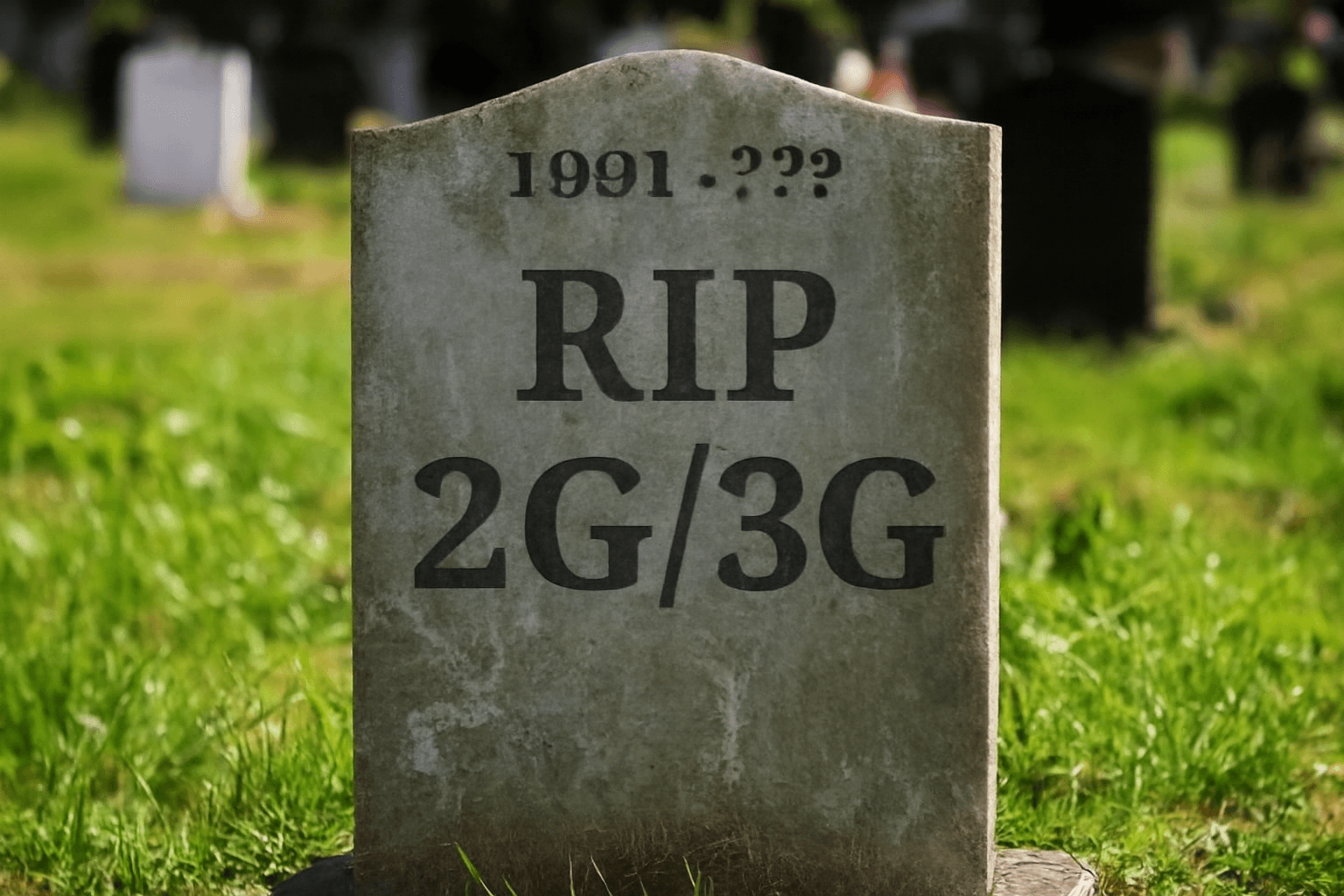
The world’s quietly pulling the plug on 2G. For a lot of industrial machines, that’s a big deal (in my opinion).
Across America, Europe, and some parts of APAC, telecom operators are already shutting down 2G (and 3G) networks to free up spectrum for the big guys like 4G, LTE-M, and 5G. In the US, companies like AT&T, T-Mobile, and Verizon have already terminated their legacy networks, and many European countries are following suit. In Ph, according to DICT, 3G is on track to be phased out by the end of September, while 2G shutdown is already underway.
Ofc this makes sense and a good cause for security reasons as well. But for IoT reasons? it's a shock. Just to remind you that we are so lagging behind. Meaning, our tech infra is still catching up.
Most people probably won’t even notice. I get it. But for industries running thousands of connected devices? just think of smart meters, vending machines, and remote systems. This is a big shift. I wouldn’t be surprised if this breaks a lot of legacy systems. Plus, just imagine the cost of migration, it's crazy. Perhaps, another budget insertions ? Here comes the crocs (iykyk)
I’ve seen it firsthand how many government projects here that rely on remote sensing still uses GSM based communication protocols. And honestly, I think it’s understandable. GSM has been the go-to because it's the best in terms of cost, reliability, and use, even if it’s outdated.
We should know that 2G/3G still matters even if it sounds ancient. It’s been the backbone of M2M communication for decades.
Which is why folks, oneM2M is the way forward. We should embrace the open standard, and start building future-proof tech.
tech#tech
IoT#IoT
GSM#GSM
M2M#M2M
2G#2G
3G#3G
Open Standard#Open Standard
Not Biased#Not Biased
Like this post
View comments
40
Views